Ingredients
For the Broth
- 2 lbs pork shoulder, cut into 2-inch chunks
- 1 lb pork bones (optional, for richer broth)
- 1 large white onion, quartered
- 6 cloves garlic
- 2 bay leaves
- 1 tbsp dried oregano
- Salt to taste
- 12 cups water
For the Red Chile Sauce
- 6 guajillo chiles, dried, stems and seeds removed
- 3 ancho chiles, dried, stems and seeds removed
- 2 chiles de árbol (optional, for extra heat)
- 4 cloves garlic
- 1/2 tsp ground cumin
- 1/4 tsp ground cloves
For the Soup
- 2 cans (29 oz each) hominy, drained and rinsed
For Garnish
- Shredded cabbage
- Thinly sliced radishes
- Diced white onion
- Fresh or dried oregano
- Lime wedges
- Tostadas or tortilla chips
- Dried chile flakes (optional)
Instructions
Step 1: Cook the Pork
Place the pork shoulder, pork bones, quartered onion, garlic cloves, bay leaves, oregano, and salt in a large pot. Cover with 12 cups of water and bring to a boil. Reduce heat to low, skim off any foam that rises, and simmer for 2-3 hours until the pork is very tender and falls apart easily.
Step 2: Prepare the Chile Sauce
While the pork cooks, toast the dried chiles in a dry skillet over medium heat for 1-2 minutes per side until fragrant and pliable. Be careful not to burn them. Place the toasted chiles in a bowl and cover with hot water. Let soak for 20-30 minutes until soft.
Step 3: Blend the Chile Sauce
Drain the chiles, reserving 1 cup of the soaking liquid. Add the softened chiles to a blender with the garlic, cumin, ground cloves, and reserved soaking liquid. Blend until completely smooth. Strain through a fine-mesh sieve to remove any remaining skin.
Step 4: Shred the Pork
Remove the cooked pork from the broth and shred it into bite-sized pieces using two forks. Strain the broth and discard the onion, garlic, bones, and bay leaves. Return the broth to the pot.
Step 5: Combine Everything
Add the chile sauce to the strained broth and stir well. Add the shredded pork and drained hominy. Bring to a simmer and cook for 20-30 minutes to let the flavors meld. Taste and adjust salt as needed.
Step 6: Serve
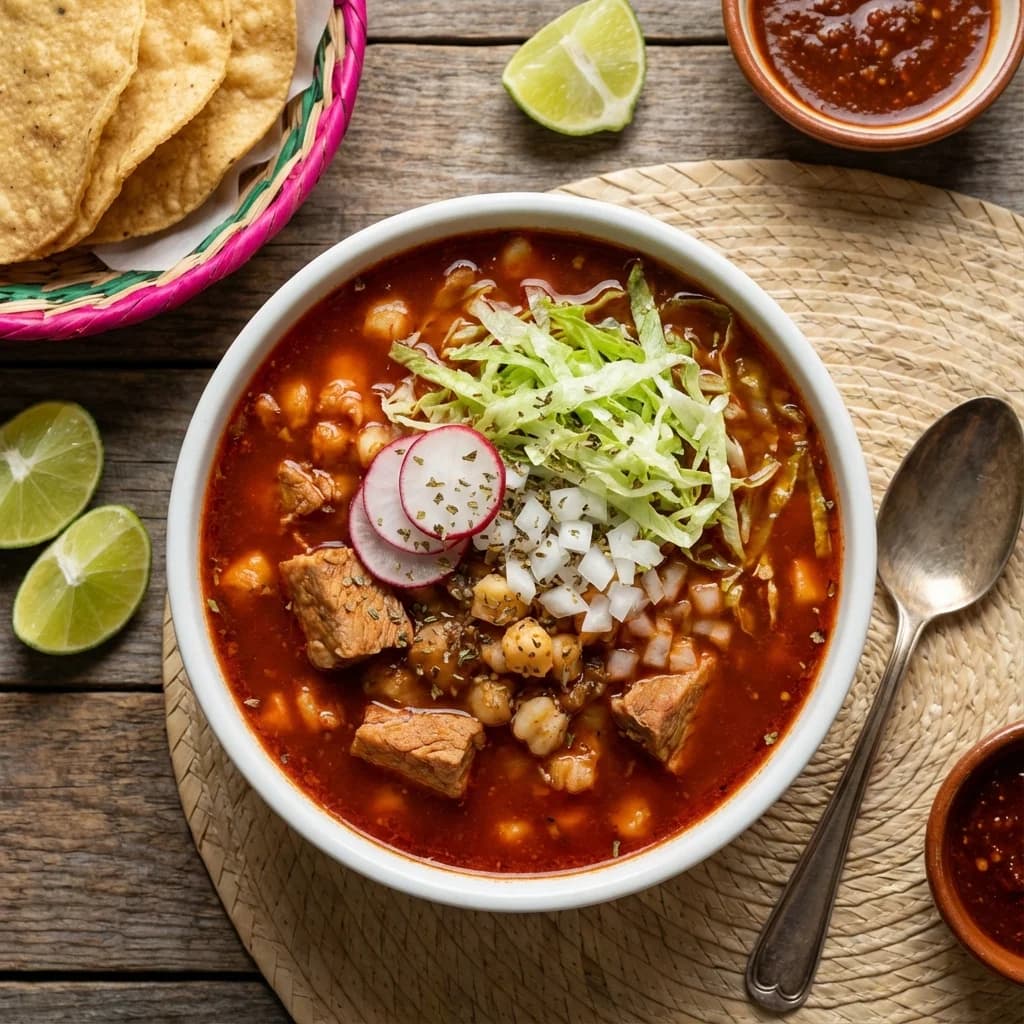
Ladle the pozole into large bowls. Serve with all the garnishes on the side so guests can customize their bowl with shredded cabbage, radishes, onion, oregano, lime juice, and chile flakes.
Chef's Tips
- Make it Ahead: Pozole tastes even better the next day after the flavors have had time to develop. Store in the refrigerator and reheat gently.
- Hominy Options: While canned hominy is convenient, dried hominy (nixtamal) cooked from scratch gives a more authentic texture. Soak overnight and cook for 2-3 hours.
- Broth Richness: Adding pork bones creates a more gelatinous, flavorful broth. Ask your butcher for neck bones or spare ribs.
- Heat Level: The guajillo and ancho chiles provide flavor without too much heat. Add more chiles de árbol if you prefer it spicier.
Variations
- Pozole Verde: Replace the red chile sauce with a green sauce made from tomatillos, poblano peppers, cilantro, and pepitas.
- Pozole Blanco: Skip the chile sauce entirely for a milder, white broth version.
- Chicken Pozole: Substitute chicken thighs for pork and reduce cooking time to 45 minutes.
- Vegetarian Pozole: Use mushrooms and vegetable broth, and add extra hominy for heartiness.
Storage Instructions
Store leftover pozole in an airtight container in the refrigerator for up to 4 days. The fat will solidify on top when cold - this helps preserve the soup. Reheat in a pot over medium heat, stirring occasionally. Pozole also freezes well for up to 3 months; thaw overnight in the refrigerator before reheating.
Nutritional Information
Per serving (approximately 2 cups):
- Calories: 420
- Protein: 32g
- Carbohydrates: 35g
- Fat: 18g
- Fiber: 6g
- Sodium: 890mg
Nutritional Information
Calories
420
Protein
32g
Carbohydrates
35g
Fat
18g